Contents
Introduction
If you knew how much more I am than just a paragliding guide on the Dune du Pilat.
My job is to transcend my customers' lives.
Because hang-gliding over Europe's highest dune is more than just an original activity to enjoy when you're on vacation in the Basin or in Bordeaux.
What my customers really experience is a transformation.
- They start with excel by coming to me..,
- In the air, they discover with their eyes and as a person the dune, its beaches, the basin...
- They are all shot through with an adrenaline rush triggered by this emotion
- They are marked for life by the moment, and will talk about it for a long time to come.
- They are driven by the need to preserve **** this fragile heritage.
- Finally, they connect with natureall the senses on the alert.
When they touch down, they're not the same.
Here.
Only there.
When I see it all in the last look we exchange just before you walk away from me.
I know I've done a good job.
My name is Pierre-Evelyn.
In real life, I'm a paragliding instructor on the Dune du Pilat, taking people like you to fulfill one of mankind's oldest dreams: flying.
There are many guides to paragliding on the Dune du Pilat on the Internet, but this one has 3 special features that I hope will interest you:
- Information regularly updated
- They come from an experienced local paragliding instructor
- This guide is interactive, so you can ask your questions at the end.
Let's get started and enjoy the flight!
Special features of paragliding on the Dune du Pilat
What is paragliding?
Let's start because it isn't: paragliding isn't skydiving.
Like him, it's an aerial sport.
Like him, it is practiced under a wing.
But that's where the similarities end.
Skydiving involves jumping, usually from a plane. The idea is to fall into the void under a wing that slows your fall.
If I had to define paragliding, I'd say it's a regulated aerial sport that involves flying and staying aloft using air currents (aerology).
This outdoor activity is practiced from high take-off sites, and requires a steerable wing and a harness for flying from a seated position.
This sport combines technique with the art of mastering wind and gravity, offering unrivalled free-flight sensations.
Why paragliding?
We paraglide to fulfill a dream: to fly.
We also do it to surpass ourselves and feel the thrill.
Paragliding is first and foremost a personal adventure, and then a collective practice in the sense that we share a spot to experience maximum pleasure and well-being.
My customers are looking for a break from everyday life, an escape from the burdens that life on earth can sometimes be.
Flying gives you a unique feeling of freedom and lightness.
The worries stay downstairs.
Landscapes change before our eyes, silence is disturbed only by the wind, and each flight becomes a meditation in motion.
Some fly for the scenery, others for the thrill, but all find paragliding a deeply immersive experience.
They all remember their first time paragliding.
How do you paraglide?
There are 5 distinct phases:
1- Pre-flight: during this phase, we check our equipment: wing, lines, harness, harness, get into position and concentrate for the next phase.
2- Paragliding generally takes off from a high point, which may be a few dozen meters above sea level or high in the mountains. The paraglider pilot raises the wing into the wind, usually on a gentle slope. The wing is inflated above the pilot, who moves vertically to draw even more air into the wing's cells, creating lift to rise gently into the air.
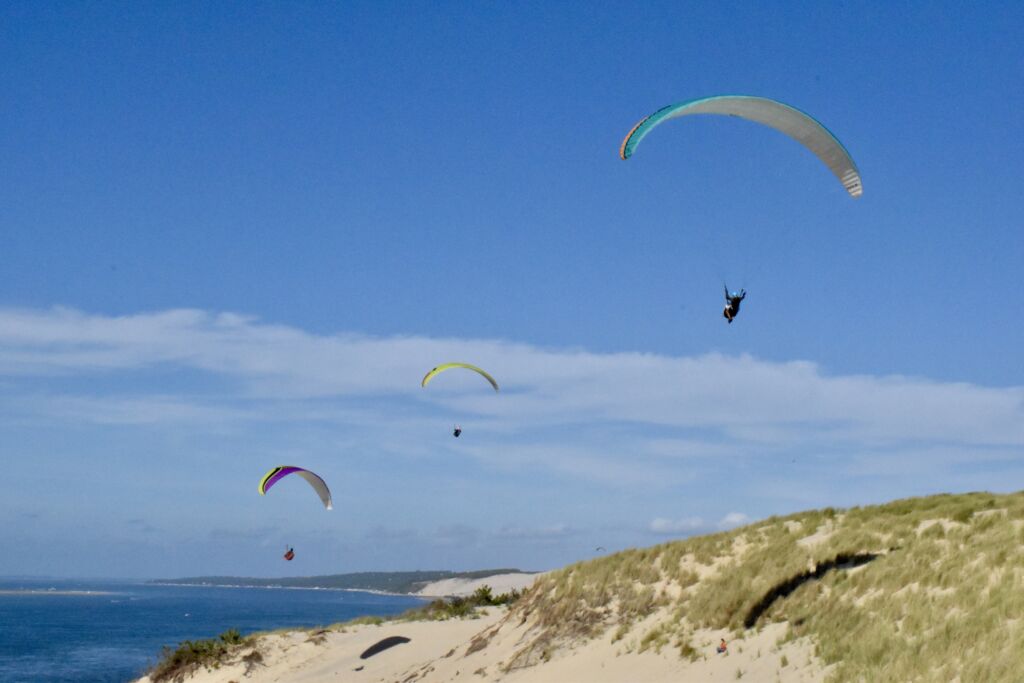
3- Flying: here, control is by certain lines, hand controls connected to the wing, allowing you to turn right or left, control your climb or descend more or less quickly.
4- The soft landing is made by rounding off into the wind and reducing wing speed. Depending on the pilot's technique and the conditions, a landing can be the equivalent of a chair hop or a gentle run. When tandem flying on the Pilat dune, it's not uncommon to ask the customer to land on his or her buttocks (the sand cushions the tandem even more).
5- Post-flight. This is an interesting phase, when the adrenalin is still pumping, and the questions come thick and fast as you pack up your gear. We usually clumsily repeat in words what we've just experienced and felt. Memories are imprinted at that moment, deep in the memory.
Where can I go paragliding?
Paragliding can be practised in many places where flying conditions are favourable, including mountains, hills and coastal sites.
You need an upwind take-off zone, a safe environment and stable aerology.
In France, sites such as the Alps, the Pyrenees and, of course, the Dune du Pilat are among the most popular.
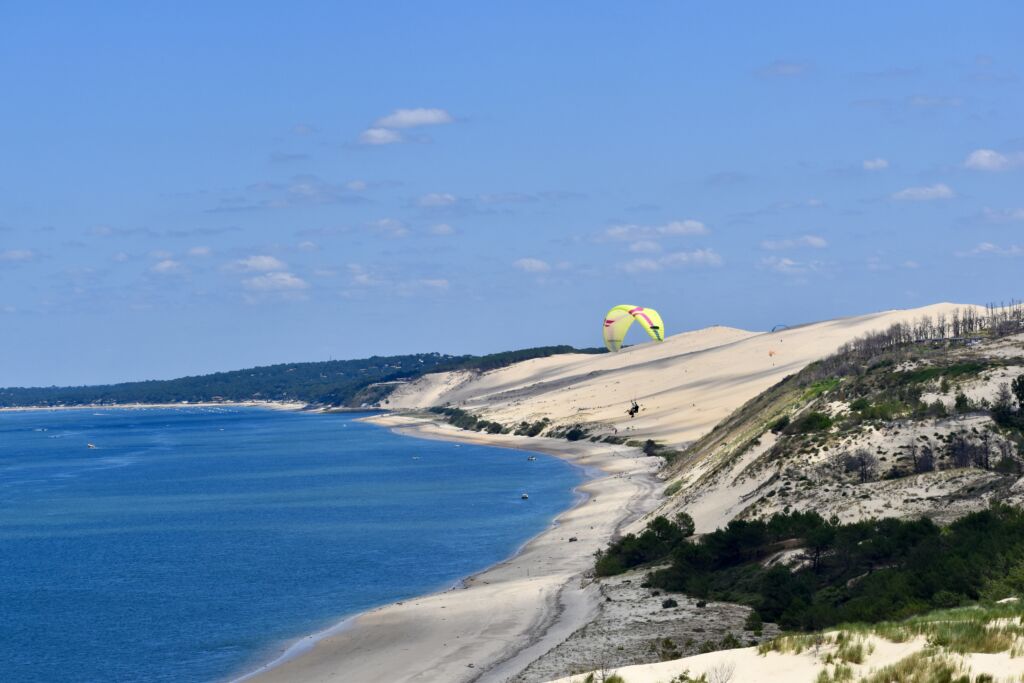
The Dune du Pilat offers the advantage of a take-off and landing in the sand, and a breathtaking view of the Atlantic Ocean, the Banc d'Arguin, the Landes forest and the Arcachon basin.
The site offers a spectacular and rare setting that novices love, and that experienced paragliders from all over France come to try out at least once in their lives.
What is the average cost of a paragliding flight in France?
A tandem flight, solo flight or flight school does not cost the same.
If we focus on a tandem flight, the cost of a paragliding flight here too varies according to several factors such as the duration of the flight, the region and the provider.
On average, a 20-30 minute tandem discovery flight costs between 80 and 150 euros.
At Dune Parapente I offer rates from 60€ (cool 10mn flight) to 250€ (premium 30mn flight with all the options like HD 360° video / photos (given at the end of the flight on an SD card) alternating moments of ride, sensation and even initiation to piloting!
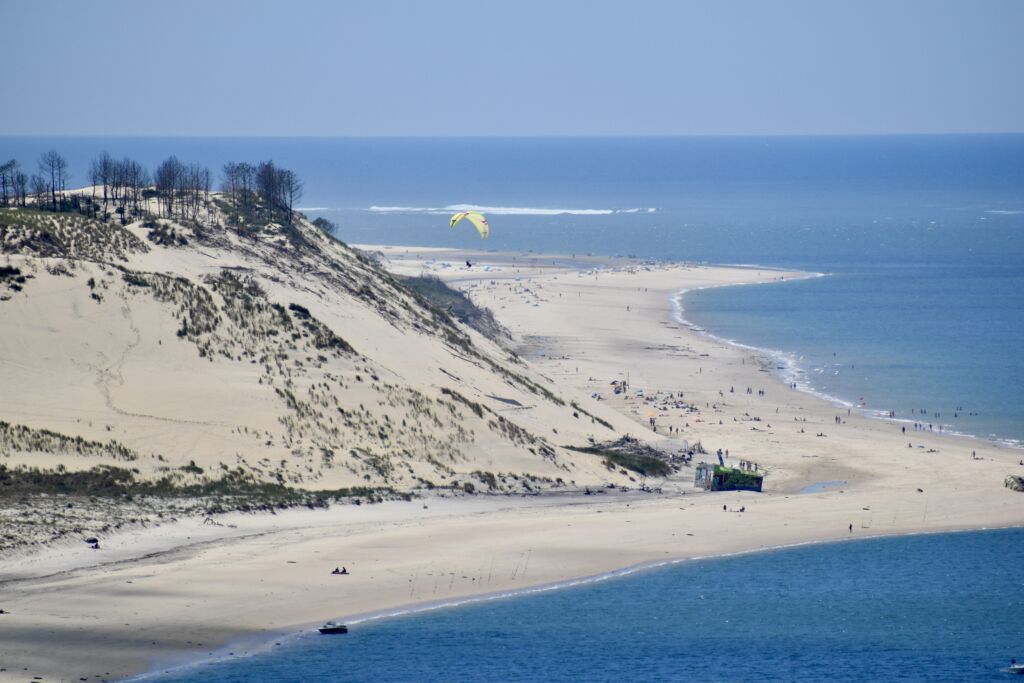
The Pilat Dune
4000 years of history
Dune du Pilat, sometimes spelled "Dune du Pyla", is the star of the Arcachon basin.
Attracting between 1.5 and 2 million visitors every year, the "grande dame" is one of France's top 20 most-visited sites, and one of the top 3 natural sites.
At 104 metres high (2023 figure), it is the highest dune in Europe.
Its formation began around 4,000 years ago, and its distinctive feature is that it is constantly shaped by the winds.
It is inexorably advancing inland by 1 to 5 m per year.
The dune is not only a geological wonder, but also a historical landmark, having witnessed the passage of ancient civilizations and a landmark for maritime navigation.
Who owns Dune du Pilat?
The Dune du Pilat is located in the commune of La Teste de Buch and is mainly publicly owned and managed by the Conservatoire du Littoral, a French agency dedicated to coastal protection.
But part of the dune also belongs to private owners, despite the fact that the whole site is protected to preserve its unique and fragile character.
How much does it cost to access Dune du Pilat?
Access to the Dune du Pilat is free for all visitors.
Nearby parking, on the other hand, is subject to a fee, which varies according to the season (between €1 and €7 for 4 hours, depending on the season).
The money raised goes towards dune conservation efforts, while making this natural wonder accessible to as many people as possible. So paying for your parking minimizes the impact you'll have on the dune by visiting it.
Parking on the Petit Nice beach is free, but you'll have to walk a little along the beach to reach the Pilat Dune.
How is the Pilat Dune formed?
The formation of the Pilat Dune is the result of a complex process involving the accumulation of sand transported by ocean currents and blown by winds.
The dune is in perpetual motion.
One of the most fascinating aspects of the Pilat Dune is that it moves from one year to the next.
Every year, it advances a few metres towards the Landes forest, gradually burying the trees at its foot as well as precious square metres of private property at the foot of its eastern face.
Fauna and flora
The Pilat Dune is home to remarkable biodiversity.
Here you'll find plant species adapted to harsh conditions, such as oyats and sand sedges, as well as protected species like the sand immortelle.
The local fauna includes insects and molluscs that attract various species of lizards and migratory birds that use the dune as a landmark.
Preserving this fragile ecosystem is a priority for the site managers.
Paragliding guide
The paper paragliding guide
Paragliding guides are available in paper format.
A remarkable manual for anyone with a passion for paragliding, offering a wealth of practical and theoretical information.
They can include detailed maps, safety tips, flying techniques, and anecdotes about the best paragliding sites.
They are designed for beginners and those preparing their paragliding course or training.
This format is ideal for those who like to have a tangible medium to consult during their outings.
I will mention here only 3 examples that I recommend you to read:
- Paragliding: beginners and progress by Ménégoz and Goueslain
- Manuel du vol libre parapente by Menegoz and Jacques
- Topoguide to paragliding in France South West quarter of Grandferry
The paragliding guide as a web article and pdf download
In the digital age, online paragliding guides in downloadable PDF format have become a real plus for those interested in paragliding.
These interactive guides have the advantage of being regularly updated, reflecting the latest information and trends.
They can include videos, testimonials from experienced pilots, and interactive sections where readers can ask questions and get answers in real time.
That's what this Dune du Pilat paragliding guide is all about.
A paragliding instructor is also a guide
To finish this section on the different ways of interpreting the meaning of paragliding guide, I'd like to finish by writing that a paragliding instructor, like myself, plays an essential guiding role.
I'll be your first point of contact to explain this activity to you, but also to introduce you to the spot and make you aware of the need to preserve it.
I accompany you when you need to overcome your fears or legitimate apprehensions.
I'll guide you through the subtleties of air currents, or explain the safety rules you need to observe.
Maybe I'm the one who'll introduce you to paragliding in general, and to paragliding on the d'un du Pilat in particular.
Who can practice?
Paragliding is accessible to a wide range of people, from young adults to the elderly, as long as they are in good physical condition.
You don't have to be an athlete to paraglide.
For a flight on the dune, it's enough to be able to climb it to reach the take-off site.
Paragliding can be done solo or in tandem, which makes it accessible even to complete beginners, but there will be less of a requirement if you come for a tandem flight.
But it's an important question, so let's take a closer look.
Who can paraglide on Dune du Pilat?
Paragliding for children
Safety first
Safety is the top priority when it comes to paragliding children.
Experienced instructors take care to assess each child's physical condition, make sure they understand the instructions and provide them with equipment perfectly suited to their size.
Benefits for young people
Paragliding can be an incredibly rewarding experience for children.
This helps them develop self-confidence, overcome fears and discover a deep respect for nature.
The sensations of flight and the beauty of the landscapes seen from the sky are memories that will remain engraved in their minds, stimulating their curiosity and passion for adventure.
Conditions and restrictions
There are certain age and weight restrictions for young paragliders.
In general, children must be at least 4 years old to fly tandem, and the minimum weight requirement is often 20 kg.
Parents must also give written consent and, in some cases, attend a safety briefing to understand the protocols and associated risks.
Paragliding for the elderly
Fitness assessment
Elderly paragliders need to be able to climb halfway up the dune on their own.
Although paragliding is not a physically demanding activity, it is important to ensure that candidates have no health problems incompatible with flying.
Instructors can't assess people who want to fly, so it's important for candidates to present their own medical conditions, which could be an obstacle to paragliding.
Wellness and benefits
Paragliding can offer many benefits to the elderly, not least in terms of mental and emotional well-being.
Flying over magnificent landscapes provides an unrivalled sense of freedom and tranquillity.
It can also boost self-confidence and offer a new perspective on life, encouraging an active, positive approach to aging.
Adaptations and precautions
For seniors, certain adaptations may be necessary.
Harnesses specially designed to offer greater comfort and support can be used.
Instructors are trained to manage smoother flights and take extra precautions to minimize any physical or emotional stress.
Communication and preparation play a key role in ensuring that every flight is a safe and memorable experience.
Paragliding by sensitive people (dizziness, etc.)
Understanding fears and apprehensions
Vertigo and fear of heights are common obstacles for many people when it comes to paragliding.
Thanks to my experience, I know how to deal with these fears in an empathetic and progressive way.
By explaining the flying process, showing demonstrations and answering any questions, I generally help participants feel more comfortable and confident.
Fear is a sensation, an intellectualization of possible danger, and talking about it is the first step.
But it will always be my customers who decide in the end whether or not to trust me.
Stress management techniques
For those who are particularly sensitive or anxious, I recommend stress management techniques before your flight.
This includes visualization exercises, on-site observation by coming early, breathing exercises, relaxation methods and detailed briefings to demystify the experience.
Tandem flying with a reassuring, experienced instructor can also help alleviate fears, offering constant support throughout the flight.
Positive, progressive experiences
Many people find that their fears diminish considerably (or even disappear altogether) once they're in the air.
The sensations of flight, the beauty of the scenery and the absence of the sensation of freefall all contribute to creating a positive experience.
I offer short flights (10mn) at lower altitudes for over-anxious beginners, allowing gradual acclimatization and encouraging greater confidence for future flights.
What to see on a paragliding flight over the Dune du Pilat
As you soar over the Dune du Pilat, you'll discover spectacular panoramas and viewpoints otherwise inaccessible.
The view over the Banc d'Arguin, the Bassin d'Arcachon, the surrounding forests and the Atlantic Ocean is breathtaking.
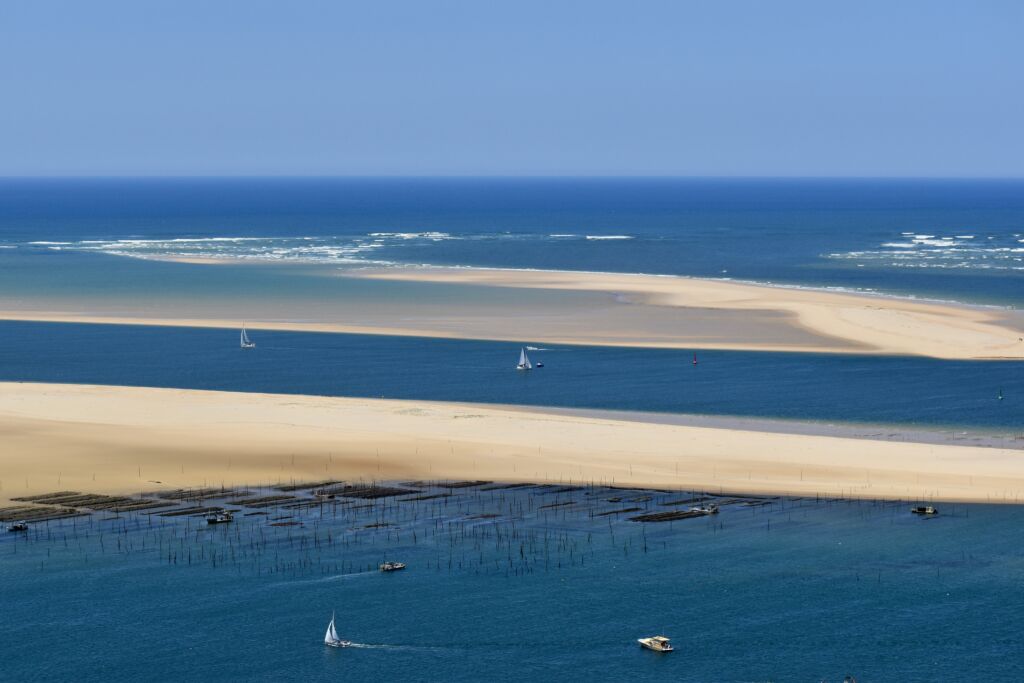
Each flight is a unique visual adventure.
Every glance reveals the diversity of this exceptional region.
How much will a paragliding experience on the Dune du Pilat cost in 2024?
How much does a paragliding flight on the Dune du Pilat cost?
Paragliding on the Dune du Pilat is an unforgettable experience that can be adapted to suit all tastes and budgets.
Whether you're looking for a leisurely flight to discover the sensations of paragliding, or a more dynamic adventure with thrills and spills, there are a variety of options to meet your expectations.
Here's a detailed overview of the different flight options and their prices.
Prices for paragliding baptisms
Cool flight
The Cool flight is ideal for beginners or those who prefer a calm, relaxing experience. This flight allows you to float gently over the dune and enjoy the spectacular view without being jostled too much by the dynamic movements.
- Cool flight - 10 minutes: €60
- Cool flight - 20 minutes: €90
The Fun Flight
For thrill-seekers, the Fun flight is the ideal formula. This flight is more dynamic and offers exciting aerial maneuvers, subject to favorable weather conditions. It's perfect for those who want to add a dose of adrenalin to their flying experience.
- Fun flight - 10 minutes: €70
- Fun flight - 20 minutes: €110
Video and photo options
To immortalize your adventure, video and photo options are available. These souvenirs are delivered directly to you at the end of the flight on a complimentary microSD card.
- HD video + photos option: €30
- HD 360° video + photos option: €50
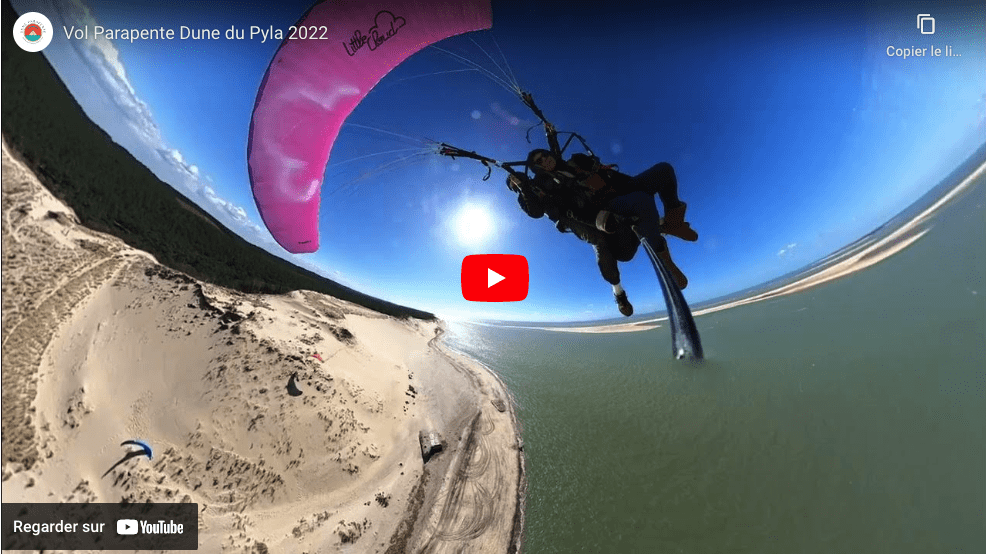
These options let you relive your flight at any time, and share this unique experience with friends and family. 360° videos can be played back using the GoPro Player application, adding an immersive dimension to your memories.
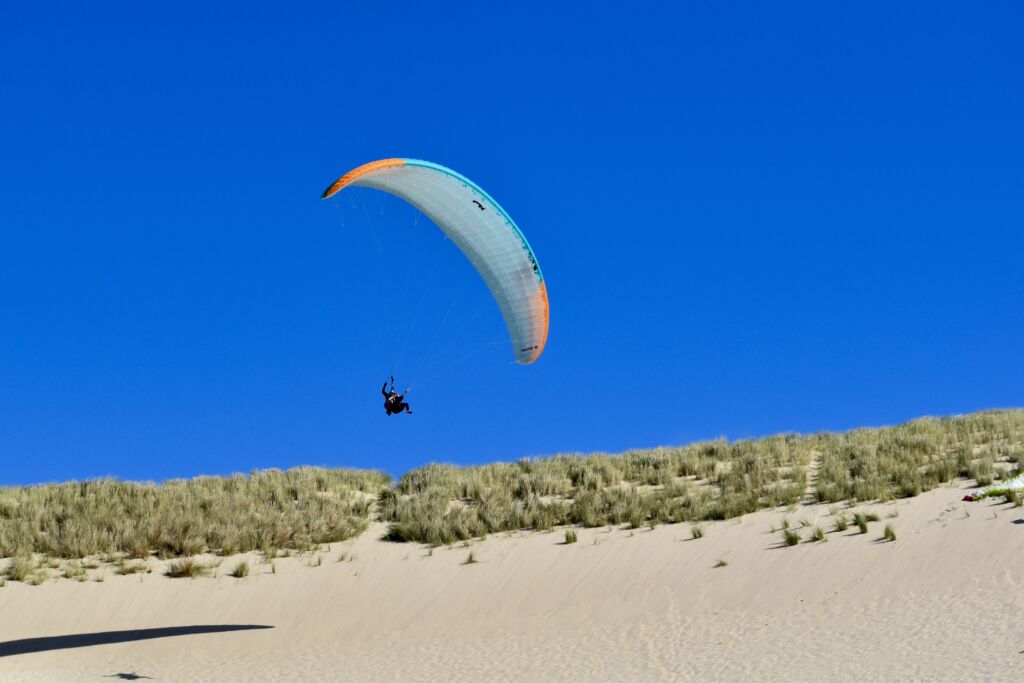
Gift voucher prices
If you'd like to offer this experience to a loved one, we can help. gift vouchers are available for flights Silver, Gold and Premium. These packages include not only the flight, but also HD 360° video and photos, for a complete and memorable souvenir.
- Silver flight - 10 minutes including HD 360° video and photos: €120
- Gold flight - 20 minutes including HD 360° video and photos: €199
- Premium flight - 30 minutes including HD 360° video and photos: €250
Visit gift vouchers are available as PDFs for printing or emailing, making them an easy gift for any occasion.
Flight types and characteristics
Silver flight
Silver flight is an excellent option for those looking for a short but intense flight, with the option of including HD 360° video and photos for €120.
This 10-minute flight is the perfect way to discover paragliding while capturing every moment of the adventure.
Gold flight
Gold flight is designed for those who want a longer, more immersive experience.
This 20-minute flight, priced at €199, also includes a 360° HD video and photos, providing a complete souvenir of this aerial adventure.
What's more, this flight includes an introduction to piloting, adding an interactive dimension to your experience.
Premium flight
For the ultimate experience, Premium flight offers 30 minutes of flying with sensations and an introduction to piloting.
This package, priced at €250, also includes HD 360° video and photos, enabling you to relive and share this exceptional experience with superior image quality.
Terms and conditions
Payment for paragliding services is made directly on site, on the day of the flight.
Payments can be made in cash or by cheque with proof of identity.
Please note that vacation vouchers are not accepted.
Booking conditions
To book your paragliding flight with Dune Parapente, simply complete the online form available on our website.
Reservations are free of charge, and payment will be made on the spot on the day of the flight, according to the rates shown on our page.
We accept payment by cash or cheque, accompanied by proof of identity.
Paragliding is highly dependent on weather conditions, so your flight may be cancelled the day before the scheduled date.
In this case, you will be invited to book a new date on our website.
Unaccompanied minors must provide a parental authorization form, downloadable from our website, which must be presented on the day of the flight.
The 2024 season runs from April 14 to September 30, and online bookings can be made right up to the day before the flight.
For same-day bookings, please contact us directly on +33 (0)6 33 54 98 11.
Each participant must complete an individual booking form.
Take the plunge
Book a paragliding flight
on the Pilat Dune
Our latest customer reviews


Going further
- The guides :
- Official websites :
- Let's talk about protecting Dune du Pilat
FAQ :
How do I get to Dune du Pyla for my flight?
1. By car
To reach Dune du Pilat by car, take the A63 motorway if you're coming from Bordeaux, then exit at Arcachon and follow the signs for Dune du Pilat.
A large pay parking lot is available close to the site.
In high season, it's advisable to arrive early to find a seat easily.
The parking lot is a 10-minute walk from the dune.
We recommend access from the north of the dune, so park at the Petit Nice parking lot and join us after a 10-minute walk along the beach.
2. By public transport
You can also get to the Dune du Pilat by public transport.
From Bordeaux, take a train to Arcachon, then take the Baïa line 1 bus to Dune du Pilat.
Buses are frequent and the journey offers a pleasant view of the region.
This mode of transport is ideal for those who prefer to avoid the hassle of driving and parking.
3. By bike or on foot
For sporty types or nature lovers, accessing the Dune du Pilat by bike or on foot is a pleasant option.
Numerous cycle paths criss-cross the region, offering a safe and picturesque route.
Bicycles can be hired in Arcachon or the surrounding area.
For hikers, there are a number of signposted paths leading up to the dune, taking in the beauty of the surrounding landscape.
Paragliding Dune du Pyla or Dune du Pilat, how do you spell it?
1. The origin of both names
The natural site is officially known as the "Dune du Pilat".
However, it is commonly referred to as "Dune du Pyla" in reference to the nearby seaside resort of Pyla-sur-Mer.
The two terms are used interchangeably, but "Dune du Pilat" is the correct and official name.
2. Use in official communications
In all official communications, administrative documents and tourist guides, the term "Dune du Pilat" is used.
This includes road signs, tourist brochures and government publications.
Using "Dune du Pilat" in a formal or informative context is therefore recommended.
3. Popular and local use
In everyday discussions, on social networks, and even among locals, "Dune du Pyla" is commonly used.
This name is particularly common in advertisements, travel blogs and informal conversations.
How do you prepare for a paragliding flight on Dune du Pyla?
1. Choose the right equipment
Preparing for a paragliding flight starts with choosing the right equipment.
It's essential to wear comfortable, weather-appropriate clothing.
Choose light, breathable clothing in summer, and warmer clothes in autumn or spring.
Closed shoes with a good grip can be used, but we also recommend flying barefoot in summer.
Don't forget a pair of sunglasses to protect your eyes from the wind and sun, and a bottle of water to stay hydrated.
2. Find out about weather conditions
Visit weather conditions play a crucial role in paragliding.
Before setting off, your instructor will check the weather forecast for the Dune du Pilat.
Moderate wind conditions, clear skies and no precipitation are ideal for paragliding.
In the event of bad weather, your flight may be cancelled or postponed for safety reasons.
Regular weather updates are available on my Instagram page https://www.instagram.com/duneparapente/
3. Mental and physical preparation
A paragliding flight, although generally safe, can be an intense experience, especially for beginners.
Prepare yourself mentally by familiarizing yourself with the sensations of flight and discussing any apprehensions you may have with your instructor.
Physically, make sure you're well rested and in good health on the day of the flight.
A light pre-flight diet can help avoid discomfort.
Finally, arrive with an open attitude, ready to enjoy this unique experience.
A briefing session with your instructor will help you understand safety procedures, take-off and landing techniques, and ask all your questions so you can set off with confidence.
What to do after a paragliding flight on Dune du Pyla?
After experiencing the exhilaration of a paragliding flight over the majestic Dune du Pilat, the region offers many activities and attractions to extend your day of adventure.
The take-off spot is surrounded by the campsites of the Dune du Pilat so you can either walk back to your campsite, or here are some suggestions for discovering the wonders nearby:
1. Explore the Dune du Pilat on foot
After your flight, take time to explore the Dune du Pilat on foot.
The climb to the top of the dune is an experience in itself, offering exceptional panoramic views over the Arcachon Basin, the Landes forest and the Atlantic Ocean.
The descent to the beach is also a fun adventure, especially for the young ones.
Don't forget to take photos and enjoy the unique landscape of this natural site.
2. Visit the Bay of Arcachon
The Arcachon Basin is a region rich in discoveries.
You can take a boat trip to explore the surrounding islands, such as Ile aux Oiseaux and its famous cabanes tchanquées.
Seafood lovers can enjoy fresh oysters directly from local oyster farmers, especially in the nearby villages of Pyla sur mer and le moulleau.
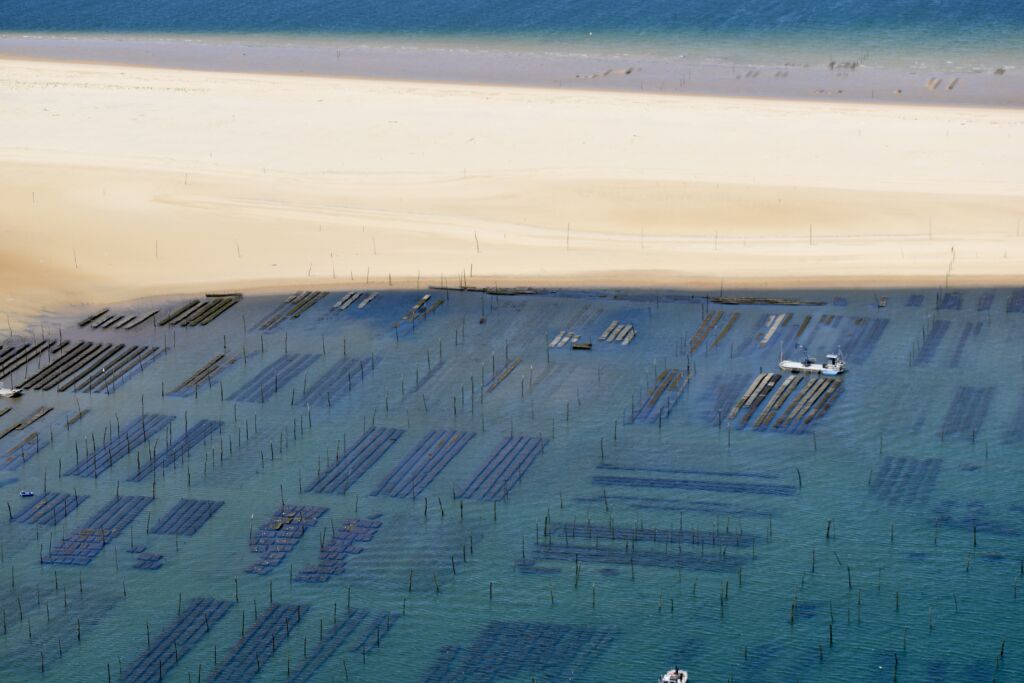
For a relaxing experience, stroll along the sandy beaches and climb back up the Corniche staircase to enjoy a meal in one of the Arcachon basin's most popular restaurants.
3. Discover the Landes forest
The Landes forest, near the Dune du Pilat, is one of Europe's largest pine forests.
It's an ideal spot for outdoor activities such as hiking, biking and picnicking.
Marked trails will guide you and help you discover the local flora and fauna.
Fires have taken their toll on this area, which is still growing back, hence the traffic bans you can see here and there, but the forest is regenerating and it's almost historic to be able to see it like this.
4. Relaxation and gastronomy
After so much excitement and activity, there's nothing like relaxing in one of the many restaurants or cafés in the area.
Enjoy local specialties such as seafood, Bordeaux cannelé and the famous Bordeaux wine.
For a memorable dining experience, many establishments offer terraces overlooking the sea, where you can enjoy a meal while admiring the sunset.
Pyla sur mer, Moulleau, Arcachon with its first line of restaurants and oyster huts in the harbors, there's something for everyone.
5. Visit Arcachon
The town of Arcachon, just a few kilometers from the Dune du Pilat, is a charming destination to explore.
Stroll through the Ville d'Hiver to admire the 19th-century villas, stroll along the Thiers jetty, or relax on the central beach.
The Arcachon market is the perfect place to sample local produce and buy souvenirs.
If you still have some energy left, why not rent a bike and discover the city and surrounding area at your own pace?
How long does a paragliding flight on Dune du Pyla last?
The duration of a paragliding flight on the Dune du Pilat can vary according to the type of flight chosen. Here's an overview of the different options available and their respective durations:
1. Vol Cool
The Cool flight is designed for those who want a gentle, tranquil experience, ideal for a first taste of paragliding.
- Cool Flight - 10 minutes : This short flight is perfect for getting your first taste of paragliding without too much stress.
- Vol Cool - 20 minutes For those who want to enjoy the magnificent views and smooth flying experience a little longer.
2. Flight Fun
The Fun flight is designed for fans of more dynamic sensations, with more pronounced aerial manoeuvres.
- Flight Fun - 10 minutes : A short but intense, adrenalin-filled flight, perfect for thrill-seekers.
- Flight Fun - 20 minutes An option for an even more immersive experience, with more spectacular maneuvers.
3. Silver, Gold and Premium flights
For a more enriching and complete experience, Silver, Gold and Premium flights offer extended durations and include additional options such as HD 360° video and photos.
- Silver flight - 10 minutes : This flight adapts to your wishes and includes a 360° HD video and photos for a memorable souvenir.
- Gold flight - 20 minutes In addition to an extended flight, this option offers an introduction to piloting and also includes HD 360° video and photos.
- Premium flight - 30 minutes For the ultimate experience, this 30-minute flight combines sensations, pilot training and a complete 360° HD video and photo capture.
The duration of your paragliding flight on the Dune du Pilat depends on the option you choose, ranging from 10 to 30 minutes.
Each type of flight offers a unique experience, tailored to your preferences and your desired level of excitement.
Whether you're a beginner or a thrill-seeker, there's a suitable option to make your flying experience unforgettable.
What's the ideal weather for paragliding on Dune du Pyla?
Paragliding over the Dune du Pilat is an exhilarating experience, but to ensure safety and maximize enjoyment, it's crucial to fly in the right conditions. ideal weather conditions.
Here are the main meteorological aspects to consider for an optimal flight.
1. The wind
Wind is a decisive factor in paragliding. To fly safely and enjoy the experience to the full, wind conditions must be favourable:
- Wind speed The ideal wind speed for paragliding is generally between 10 and 20 km/h. Winds that are too light can make take-off difficult, while winds that are too strong can be dangerous and make flying unstable.
- Wind direction On the Dune du Pilat, a south-westerly wind is optimal, as it comes from the Atlantic Ocean and hits the face of the dune directly, creating ideal lift conditions for paragliding.
2. Visibility
Good visibility is essential for paragliding. It allows the pilot to navigate safely and enjoy the magnificent scenery offered by the Dune du Pilat :
- Clear skies A clear or partly cloudy sky is ideal. This ensures good visibility and makes flying more enjoyable. On sunny days, wear sunglasses to protect your eyes.
- Avoid fog and haze Fog: These conditions can considerably reduce visibility and make flying dangerous. It's best to wait until the fog or mist clears before taking off.
3. Atmospheric stability
Air stability is another crucial factor for a safe and enjoyable paragliding experience:
- Calm conditions : Stable weather conditions, without major turbulence, are ideal for paragliding. This ensures a smooth flight, especially for beginners or those who prefer a more leisurely experience.
- Avoid thunderstorms and storm fronts Thunderstorms and weather fronts can create dangerous turbulence. It is crucial not to fly in stormy weather or when storm fronts are expected.
4. Temperature and comfort
Although temperature is not a critical factor for safety, it does contribute to the overall comfort of the flight:
- Moderate temperature Weather: Moderate temperatures (neither too hot nor too cold) are ideal for paragliding. In summer, mornings and late afternoons are often more comfortable. In autumn or spring, it's important to dress in layers to stay warm at higher altitudes.
For paragliding on the Dune du Pilat, ideal weather conditions include moderate winds (15-20 km/h) from the southwest, good visibility with clear or partly cloudy skies, a stable atmosphere with no major turbulence, and comfortable temperatures.
Keep an eye on the weather forecast before your flight and stay in touch with your instructor for updates on local conditions.
Flying in ideal conditions not only ensures your safety, but also enriches your flying experience, making every moment unforgettable.
Whatever happens, it's your paragliding instructor on the Dune du Pilat who's responsible for collecting all this information and deciding whether it's safe to fly.
What's the ideal month for paragliding on the Dune du Pilat?
The Dune du Pilat offers a spectacular paragliding experience all year round, but certain months are particularly good for taking full advantage of optimal conditions.
Here's an analysis of the different months and why some stand out as ideal for paragliding.
1. Spring months: April to June
Spring is an ideal season for paragliding on the Dune du Pilat.
Here's why:
- Favorable weather conditions Winds: Winds are generally moderate and steady, perfect for paragliding. Temperatures are pleasant, avoiding summer heat.
- Visibility and clear skies The sky is often clear or partly cloudy, offering excellent visibility for enjoying the magnificent scenery of the Arcachon Basin and the Atlantic Ocean.
- Moderate attendance : Outside school vacations and busy tourist periods, the dune is less crowded, allowing for a more peaceful and intimate experience.
2. Summer months: July to August
Summer is a popular time for paragliding, but it has both advantages and disadvantages:
- Long days : Long summer days offer more time to fly, with early and late morning slots to avoid the hottest hours.
- Vibrance and activity Summer is the liveliest season on the Dune du Pilat, with a multitude of activities nearby. It's an ideal time to combine paragliding and other leisure activities.
- Heat and crowds Weather: Temperatures can be high, especially in the middle of the day, and the dune is very popular with tourists. We recommend flying early in the morning or late in the afternoon for more pleasant conditions and fewer crowds.
3. Autumn months: September to October
Autumn rivals spring in terms of ideal conditions for paragliding:
- Wind and temperature conditions As in spring, winds are moderate and steady, and temperatures are mild, offering optimal flying conditions.
- Visibility and peace of mind The skies are often clear and visibility excellent. What's more, after the peak tourist season, the dune is calm again, making for a serene experience.
- Autumn colors The changing colors of autumn add an extra dimension to the flying experience, with magnificent and varied landscapes.
4. Winter: November to March
Winter is the least favorable season for paragliding on the Dune du Pilat, so I don't offer tandem flights during this period.
To sum up:
- The ideal months for paragliding on the Dune du Pilat are April to June and September to October.
- These periods offer favorable weather conditions, pleasant temperatures, excellent visibility and moderate crowds.
- These months allow you to take full advantage of the flying experience while discovering the natural beauty of the region in optimal conditions.
- For an unforgettable experience, choose these periods while remaining flexible and attentive to local weather forecasts.
How does a paragliding experience on Dune du Pyla work?
A paragliding experience on the Dune du Pilat is a unique and unforgettable experience, offering a breathtaking view of the Arcachon Basin, the Atlantic Ocean and the majestic dune itself.
Here's a detailed overview of this aerial adventure, from preparation to landing.
1. Welcome and briefing
Arrival and welcome
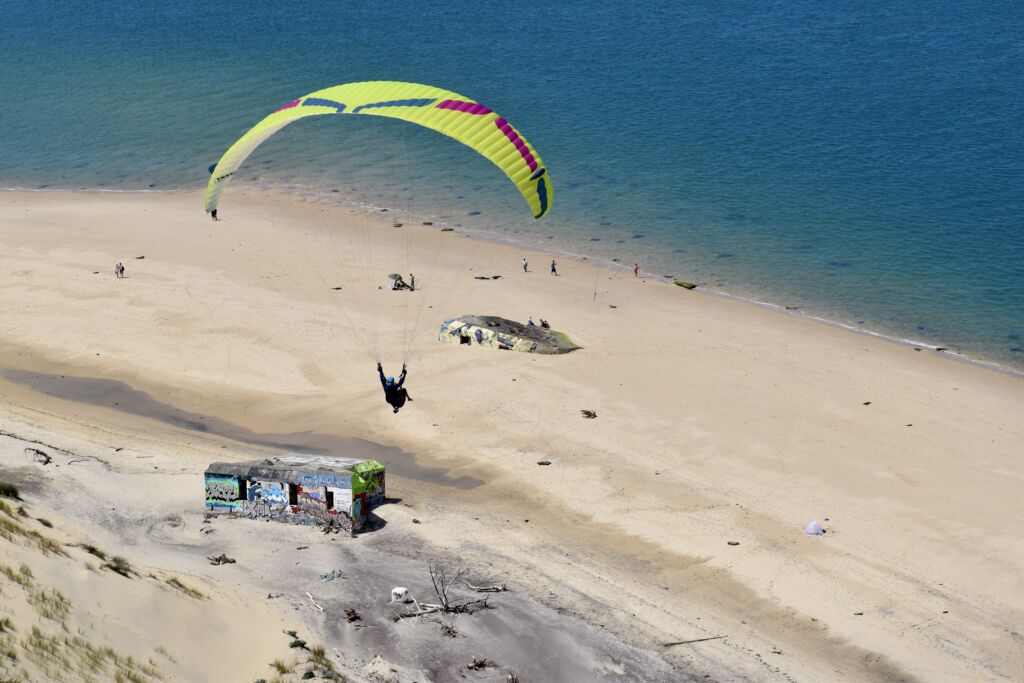
- Meeting point On arrival at the site, you will be met by your paragliding instructor. The meeting point is usually at the foot of the dune, or in a specific place designated by the paragliding school. In our case, it's the bunker on the beach of the Gaillouneys.
- Presentation You'll be greeted, paid for if you haven't already, and directed to an instructor in the nearby dune.
Safety briefing
- Safety instructions The instructor will explain the safety instructions, including the positions to adopt during take-off and landing, and the gestures to avoid during the flight.
- Equipment You will be equipped with a harness and helmet. The instructor will check that all equipment is correctly adjusted to ensure your safety and comfort.
- Weather conditions The instructor will brief you on the day's weather conditions and their impact on the flight. This is also the time to check one last time that conditions are ideal for flying.
2. Preparing for take-off
Ascent of the dune
- Ascension Depending on your starting point, you may have to climb halfway up the dune. This walk can be quite demanding due to the sand, so take your time and enjoy the scenery.
Preparing your paraglider
- Equipment installation Once at the launch site, the instructor will prepare the glider, deploying the canopy and rechecking all the equipment.
- Positioning You'll be attached to the instructor by secure harnesses in a tandem configuration. This means that you will be in front, while the instructor will be behind you, managing all the technical phases of the flight.
3. Lift-off
Take-off
- Final instructions : As take-off takes place from a seated position, you won't need to do anything special.
- Flight The sail will quickly gain height and you'll rise gently into the air.
4. Theft
Sensations and panoramic views
- Flying experience Once in the air, you'll be suspended comfortably in your harness, with a feeling of floating and freedom. You'll feel as if you're gliding through the sky, carried by the air currents.
- Panorama The view from the paraglider is breathtaking. You'll fly over the Dune du Pilat, with a breathtaking view of the Arcachon Basin, the surrounding beaches and the Atlantic Ocean.
- Monitor's comments During the flight, the instructor can give you information on the points of interest you are flying over, and answer any questions you may have.
5. Landing
Approach
- Preparation The instructor will inform you when it's time to land. He'll give you instructions on the position to adopt for a smooth landing.
Landing
- Sitting Landing: you land sitting in the sand, and the instructor takes care of everything. He won't need you to participate in this phase.
- Detachment Once on the ground, the instructor will help you detach from the equipment. You can then discuss the flight and share your impressions.
6. After the flight
Debriefing
- Feedback The instructor will offer you a debriefing to discuss your experience, the sensations you felt and the highlights of your flight.
- Questions and photos The "in-flight" option: This is also the ideal time to ask any additional questions you may have, and to retrieve any photos or videos taken during the flight if you have opted for this option.
Relaxation and exploration
- Rest Take a few moments to relax and enjoy the adrenalin of the flight. You can also explore the area around the dune or enjoy other nearby activities.
As you can see, a paragliding experience on the Dune du Pilat is a well-orchestrated adventure, from the initial welcome to the soft landing.
Every step is designed to maximize your safety, comfort and enjoyment.
Whether it's your first flight or you're an avid paraglider, this experience will leave you with lasting memories and a new perspective on the natural beauty of this exceptional region.
What is the maximum weight for paragliding on Dune du Pyla?
Paragliding on the Dune du Pilat is an experience accessible to many people, but there are certain weight restrictions for safety and performance reasons.
Here are details of the maximum weight allowed for paragliding on the Dune du Pilat, and the reasons for this limit.
1. Weight restrictions for paragliders
Standard limits
- Maximum weight The maximum weight for a passenger in a tandem paraglider is generally between 100 kg and 120 kg. This limit may vary slightly depending on the instructor or paragliding school, and the equipment used.
- Minimum weight There is also a minimum weight, often around 20 kg to 30 kg, especially for children, to guarantee a safe and stable flying experience.
2. Factors influencing weight limits
Equipment and safety
- Sail capacity Every paraglider has a specific weight range it can support. This range includes the combined weight of the passenger, instructor and equipment. Exceeding this limit can compromise glider performance and flight safety.
- Harnesses and safety Harnesses and other safety equipment are also designed for specific weight limits. Compliance with these limits is crucial to ensure that all components function correctly and safely.
Weather conditions
- Wind conditions Wind conditions play a crucial role in paragliding. In calm weather or with light winds, the weight range may be more restrictive. On the other hand, more favorable wind conditions may allow greater flexibility in weight limits.
- Air temperature and density Atmospheric conditions, such as air temperature and density, also affect sail lift. In hot weather, the air is less dense, which can reduce the sail's lift capacity.
3. Importance of communication with the monitor
Customized assessment
- Prior discussion : It is essential to discuss your weight with your instructor before book a flight. Paragliding instructors are trained to assess each situation individually and can provide recommendations based on the day's specific conditions and available equipment.
- Adapting flights In some cases, special flights can be organized for passengers close to the weight limit, using special equipment or choosing times of day when conditions are most favorable.
Safety first
- Respecting limits Respecting weight limits is crucial to the safety of all participants. Professional instructors follow strict protocols to ensure that every flight takes place in optimal safety conditions.
The maximum weight for paragliding on the Dune du Pilat is generally between 100 kg and 120 kg.
These limits are determined by equipment capacity, weather conditions and safety requirements.
It is essential to contact your instructor for personalized advice to ensure a safe and enjoyable flying experience.
Respecting these restrictions not only ensures your safety, but also maximizes the pleasure and quality of your paragliding flight.
I'm afraid of heights. Can I go paragliding?
Being afraid of heights is a common concern for many people interested in paragliding.
However, it's perfectly possible to paraglide even if you're afraid of heights.
Here's a detailed guide to why and how you can enjoy this unique experience despite your apprehension.
1. Understanding vertigo and paragliding
What is vertigo?
- Definition Vertigo is a sensation of imbalance or discomfort often triggered by heights. It is linked to visual perception and the function of the inner ear, which controls balance.
- Symptoms Symptoms may include dizziness, a feeling of impending collapse, nausea, and sometimes palpitations or increased anxiety.
Paragliding vertigo
- Difference in perception Paragliding is different from looking down from a building or cliff. You don't have a fixed point of reference in the immediate vicinity (such as the edge of a building), which can reduce the sensation of vertigo.
- Float direction : Paragliding provides a sensation of floating and gliding through the air, which is often gentler and less intimidating than traditional vertigo.
2. Testimonials and experiences
Shared experiences
- Testimonials : Many paragliders who suffer from vertigo testify that paragliding doesn't give them the same sensations as flying high. They often describe a feeling of freedom and tranquillity in flight.
- First flights : For many, the first tandem experience with an experienced instructor helps overcome apprehension. The reassuring presence of the instructor and the safety of the equipment contribute to a positive experience.
3. Tips for paragliding with vertigo
Choosing the right type of flight
- Tandem flight : Starting with a tandem flight is ideal. The experienced instructor handles all the technical aspects of the flight, allowing you to concentrate on the experience and relax.
- Quiet flight : Opt for a calm flight, such as Cool or Silver, which are designed for a gentle experience without too many dynamic maneuvers.
Mental and physical preparation
- Relaxation : Practice relaxation techniques, such as deep breathing or meditation, before the flight to calm your mind and reduce anxiety.
- Visualization Visualize yourself flying with confidence and serenity. Imagining a positive experience can help reduce fear and prepare your mind for the experience.
Monitor communication
- Inform the instructor Talk to your instructor about your fear of heights before the flight. Instructors are trained to help passengers feel comfortable and can tailor the flight to your comfort level.
- Instructions and support Follow your instructor's instructions carefully. Their expertise and experience will help you feel safe and enjoy the flight to the full.
4. In flight: what to expect and how to handle it
During the flight
- Focus on the horizon Staring at the horizon rather than looking straight down can help maintain a sense of stability.
- Breathe and relax Continue to breathe deeply and relax. The sensation of floating in the air is generally soothing and can even be therapeutic.
After the flight
- Debriefing Take the time to discuss your experience with your instructor after the flight. Sharing your feelings and receiving positive feedback can boost your confidence for future adventures.
Being afraid of heights doesn't mean you can't go paragliding on the Dune du Pilat.
By understanding that the sensations of vertigo are different in flight, by choosing a tandem flight with an experienced instructor, and by taking steps to prepare yourself mentally and physically, you can transform this apprehension into a liberating and exhilarating experience.
Many people have overcome their fear of heights to discover the unique pleasure of paragliding, and with the right approach, you can too.
Are there any medical contraindications to paragliding?
Paragliding is an exciting and accessible activity for many, but like any physical activity, it may involve certain medical contraindications. It is essential to consult a health professional before paragliding, especially if you have any pre-existing medical conditions.
Here's an overview of the main medical contraindications and precautions to take to ensure a safe and enjoyable flying experience.
1. Cardiovascular conditions
Hypertension
- Risk Caution is advised for people with high blood pressure. The stress and excitement associated with flying can potentially increase blood pressure.
- Medical advice : Medical advice is essential. If your hypertension is well controlled by medication and under supervision, paragliding may be an option.
Heart disease
- Risk People with a history of heart disease, such as angina pectoris or heart failure, or who have suffered a heart attack, should avoid paragliding without formal medical advice.
- Medical advice A cardiologist must assess the patient's ability to cope with the sensations of flight and any stress involved.
2. Breathing conditions
Asthma
- Risk Asthma sufferers may experience breathing difficulties at altitude or under stress.
- Medical advice Make sure your asthma is well controlled. Always take your inhaler with you, and tell your instructor about your condition.
Lung diseases
- Risk People with chronic lung diseases, such as chronic obstructive pulmonary disease (COPD), may find it difficult to breathe at altitude.
- Medical advice : A pulmonologist should assess your lung condition and advise you on whether or not you should go paragliding.
3. Neurological conditions
Epilepsy
- Risk : In-flight epileptic seizures can be extremely dangerous.
- Medical advice : People with epilepsy should consult their neurologist. If seizures are well-controlled and rare, a thorough evaluation is necessary before considering paragliding.
Balance disorders
- Risk Balance problems can make it difficult to manage sensations in flight.
- Medical advice : Specialist advice is needed to determine whether paragliding is a safe activity.
4. Musculoskeletal conditions
Back and neck problems
- Risk People with chronic back or neck pain, or a history of injury, should exercise caution.
- Medical advice Consult an orthopedist or physiotherapist to assess whether the harness and flight position are compatible with your condition.
Joint problems
- Risk Knee or hip problems can complicate take-off and landing.
- Medical advice A medical assessment is required to ensure that these movements do not pose any additional risks.
5. Other conditions
Pregnancy
- Risk Pregnancy is generally a contraindication to paragliding, due to the potential risks for both mother and baby.
- Medical advice Pregnant women should avoid paragliding and look for safer activities.
Psychiatric disorders
- Risk : People with severe or unstabilized psychiatric disorders may find paragliding too stressful or disorientating.
- Medical advice : An assessment by a psychiatrist is required to determine fitness to fly.
6. General precautions
Prior consultation
- Medical check-up Before booking a flight, it is advisable to consult your general practitioner. A general medical examination can help identify any potential risks.
- Monitor communication Always inform your instructor of any pre-existing medical conditions. Instructors can adapt the flight and take extra precautions.
Preparation and equipment
- Hydration and nutrition Make sure you're well hydrated and have eaten lightly before the flight. Avoid heavy meals or alcoholic beverages.
- Appropriate equipment Wear comfortable clothing suitable for flying, including closed-toe shoes.
Paragliding is a wonderful activity that can be enjoyed by many people, including those with certain medical conditions, provided the necessary precautions are taken.
Prior medical consultation is advised if you have any doubts, and open communication with your paragliding instructor is essential to ensure a safe and enjoyable experience.
By following these tips, you'll be able to enjoy the thrill of flying over the magnificent Dune du Pilat.
Can I film my own paragliding flight?
Filming your own paragliding flight is a tempting idea to capture this unique experience for unforgettable memories.
However, this approach requires certain precautions and good preparation to guarantee your safety and that of your equipment.
Here's what you need to know before registering your paragliding flight on the Dune du Pilat.
1. Rules and recommendations
Paragliding school regulations
- Security policy Many paragliding schools have strict rules concerning the use of recording devices during flight. The priority is always the safety of the passenger and the instructor.
- Prior authorization Before filming your flight, it's crucial to ask permission from the paragliding school or instructor. Some schools may allow the use of personal cameras, while others may prefer to provide their own equipment for safety reasons.
Authorized device types
- Sports cameras : Sport cameras like GoPro are often the most recommended because of their compact size, shock resistance and ability to film in high definition.
- Secure fastening It is imperative that the unit is securely fastened to your harness or helmet to prevent falls. Our instructors can advise you on the best attachment practices.
2. Tips for filming your flight
Pre-flight preparation
- Check equipment Make sure your camera is fully charged and has enough memory to record the entire flight. Use a large-capacity memory card so you don't run out of storage mid-flight.
- Use appropriate accessories Use accessories such as chest harnesses, helmet mounts or sturdy selfie poles designed for extreme activities. Make sure all equipment is securely fastened.
During the flight
- Concentration and safety Your safety and that of your instructor come first. Don't let the camera distract you during the crucial take-off and landing phases.
- Capturing key moments : Try to capture the most spectacular moments, like flying over the dune, panoramic views of the Arcachon basin and the thrill of maneuvering.
3. Alternatives and services
Videos provided by the school
- Professional options Many paragliding schools offer optional video and photography services. These professional services often use boom-mounted cameras or drones to capture angles and views you couldn't get yourself.
- Quality and safety These videos are often of high quality, allowing you to fully enjoy the experience without worrying about recording. Options often include HD videos, 360-degree shots, and photos that will be handed over to you after the flight.
Video packages
- Silver, Gold and Premium flights Some schools offer special packages that include video recording of your flight. For example, the Silver flight (10 minutes) includes 360° HD video, while the Gold flight (20 minutes) and Premium flight (30 minutes) also offer 360° HD video with photos included.
Dune du Pilat paragliding clubs affiliated to the FFVL
The Dune du Pyla, located on the west coast of France, is a renowned paragliding destination thanks to its exceptional aerological conditions and spectacular views.
Several paragliding clubs operate in this region and are affiliated to the Fédération Française de Vol Libre (FFVL), but not all!
Are paragliding accidents common on Dune du Pyla?
Paragliding is an exciting and accessible activity for many air sports enthusiasts.
The Dune du Pyla, with its exceptional aerological conditions and spectacular scenery, is a favorite spot for paragliders.
However, as with any aerial activity, paragliding involves inherent risks.
The question of the frequency of paragliding accidents on Dune du Pyla is a legitimate one, and deserves a detailed response to reassure and inform future paragliding enthusiasts.
1. Accident frequency
General statistics
- Incidents by year Precise statistics on paragliding accidents at Dune du Pyla are not always publicly available, but reports from local clubs and the Fédération Française de Vol Libre (FFVL) indicate that serious incidents remain relatively rare.
- Proportion Compared to the total number of flights every year, the accident rate is low. Most flights go off without a hitch, thanks to the expertise of our instructors and the safety conditions in place.
Types of incident
- Minor incidents Most incidents are minor fender-benders or clumsy landings that do not cause serious injury.
- Serious accidents Serious accidents, although rare, can occur due to factors such as pilot error, unforeseen weather conditions, or technical problems.
2. Safety measures
Training and qualifications
- Rigorous training Dune du Pilat paragliding schools and clubs offer rigorous training to ensure that pilots, whether beginners or experienced, are well prepared. Courses include theoretical and practical lessons on safety, meteorology and flying techniques.
- Instructor qualifications Our instructors are certified and undergo continuous training to keep up to date with best practices and new safety technologies.
Safety equipment
- State-of-the-art equipment The clubs use high-quality, regularly inspected equipment to ensure flight safety. This includes emergency parachutes, helmets and harnesses.
- Pre-flight checks Before each flight, rigorous checks are carried out on equipment and weather conditions to minimize risks.
3. Factors influencing safety
Weather conditions
- Weather Weather conditions play a crucial role in paragliding safety. Flights are often cancelled or postponed if conditions are unfavorable (strong winds, storms, etc.).
- Caution : Instructors and clubs take prudent safety decisions and do not hesitate to cancel flights if necessary.
Pilot experience and preparation
- Pilot experience The experience and skill of the pilot are decisive factors. Beginner pilots are always supervised by experienced instructors on their first flights.
- Preparation Good pre-flight preparation, including an understanding of local conditions and flying techniques, is essential to reduce risks.
There is no record of paragliding accidents on the Dune du Pilat in tandem flight (baptism). Accidents tend to happen when inexperienced paragliders fly solo and do not respect all the safety rules to the letter, for example, trying to do waggas that they do not despise, or not respecting the rules of priority in flight.
Can I pay for my paragliding flight with a vacation voucher?
Vacation vouchers are a popular method of payment in France for leisure and tourism activities.
However, their acceptance varies according to the provider and the type of activity.
If you're thinking of paying for your paragliding flight at Dune du Pyla with a vacation voucher, here's what you need to know.
1. Local provider policy
Acceptance of vacation vouchers
- Not accepted Dune du Pilat paragliding clubs and schools such as Dune Parapente do not accept vacation vouchers as a means of payment.
- Reasons : Acceptance of vacation vouchers can involve administrative complications and delays in reimbursement for providers, which explains their preference for other payment methods.
2. Accepted payment methods
Cash and bank cheques
- Species Cash payment is widely accepted and is a simple and direct way to pay for your paragliding flight.
- Bank cheques Bank checks are also accepted, provided you present valid identification at the time of payment. This ensures a secure transaction for our service providers.
Credit cards
- Availability Although the initial information does not explicitly state that credit cards are accepted, it is advisable to check directly with the service provider. Many tourism and leisure providers now accept card payments for their convenience and security.
3. Alternatives and recommendations
Online booking and payment
- Online payment Some providers offer online booking and payment via their website. This may include acceptance of credit and debit cards, making the booking process simpler and more flexible.
- Due diligence Before booking, we advise you to check the payment options available on the service provider's website or by contacting them directly.
Gift vouchers
- Special offers : Providers often offer gift vouchers for paragliding flights, which can be purchased online. These vouchers usually include electronic payment options, but check whether vacation vouchers are accepted for these specific purchases.
At present, vacation vouchers are not accepted for payment of paragliding flights at Dune du Pyla.
Accepted payment methods include cash and bank checks, with ID required for the latter.
For a hassle-free experience, it's advisable to check directly with the provider what payment options are available, including the possibility of paying online or by credit card.
So you can plan your paragliding flight with complete peace of mind and enjoy this unforgettable experience to the full.
How difficult is it to climb the Dune du Pilat?
The Dune du Pilat, located on the French Atlantic coast near Arcachon, is famous for being the highest dune in Europe and attracts many visitors every year.
If you're planning to climb this spectacular dune, here's what you need to know about the difficulty of the climb.
1. Nature of the dune
Physical characteristics
- Height The Dune du Pilat rises to around 104 metres above sea level, with a steep slope on the seaward side.
- Composition The dune: Composed mainly of fine sand, the dune is constantly shaped by winds and tides, which can influence its shape and stability.
2. Difficulty of ascent
Level of difficulty
- Ascension : Climbing the Dune du Pilat can be physically demanding due to its steep slope and soft sand, which can make each step more difficult.
- Physical condition Although this is not a technical climb, a good level of physical fitness is recommended to climb the dune without excessive difficulty.
- Duration The time needed to reach the summit varies according to individual physical condition, but generally takes between 20 and 40 minutes for healthy people.
3. Climbing tips
Preparation and equipment
- Appropriate footwear Comfortable shoes with good grip are essential to avoid slipping in the sand.
- Hydration Bring water, especially in hot weather, to stay hydrated during the climb.
- Avoid hot hours Avoid climbing during the hottest part of the day, to limit physical effort and enjoy a more pleasant experience.
Climbing the Dune du Pilat can be a challenge for some due to its steep slope and the nature of the sand.
However, with a good physical condition and adequate preparation, the climb is generally accessible to most visitors.
It's a rewarding experience that offers exceptional panoramic views from the top.
Be sure to prepare accordingly and take full advantage of this magnificent natural formation during your visit to Dune du Pilat.
Paragliding regulations on the Dune du Pilat
Paragliding on the Dune du Pilat, as a protected and popular natural site for aerial activities, is subject to specific regulations to ensure the safety of paragliders and the preservation of the environment.
Here is an overview of the main regulations to be aware of:
1. Authorizations and Access
Access to the Dune du Pilat
- Open access La Dune du Pilat is a site open to the public with no entry restrictions, giving paragliders and visitors easy access to the site.
- Restricted areas Certain areas of the dune may be temporarily restricted or off-limits for environmental or safety reasons.
2. Paragliding
Practice conditions
- Weather conditions : Paragliding flights are subject to local weather conditions. Paragliders must respect the forecasts and avoid flying in unstable or dangerous weather.
- Security Paragliding: Paragliders must follow the safety guidelines laid down by local schools and instructors, particularly with regard to safety equipment and flight procedures.
3. Environmental protection
Conservation of the Dune du Pilat
- Specific prohibitions No disturbance of local flora and fauna, and no littering of the dune. Paragliders are encouraged to respect the dune's fragile natural environment.
- Seasonal limits Seasonal restrictions may be in place to protect breeding and nesting species.
4. Local legislation
Respecting local rules
- Coordination with the authorities The clubs and paragliding schools at Dune du Pilat work closely with the local authorities and the FFVL to ensure compliance with current regulations.
- Compliance It is essential for paragliders to comply with local regulations and follow the guidelines issued to maintain a safe and preserved environment.
The Dune du Pilat offers paragliders a unique experience, but regulated to ensure the safety and preservation of this fragile ecosystem.
By respecting the established rules and keeping abreast of local conditions, paragliders can be enjoyed to the full, while contributing to the conservation of this remarkable natural site.
For specific, up-to-date information on regulations, we recommend that you consult your local clubs or the relevant authorities before planning your flight.